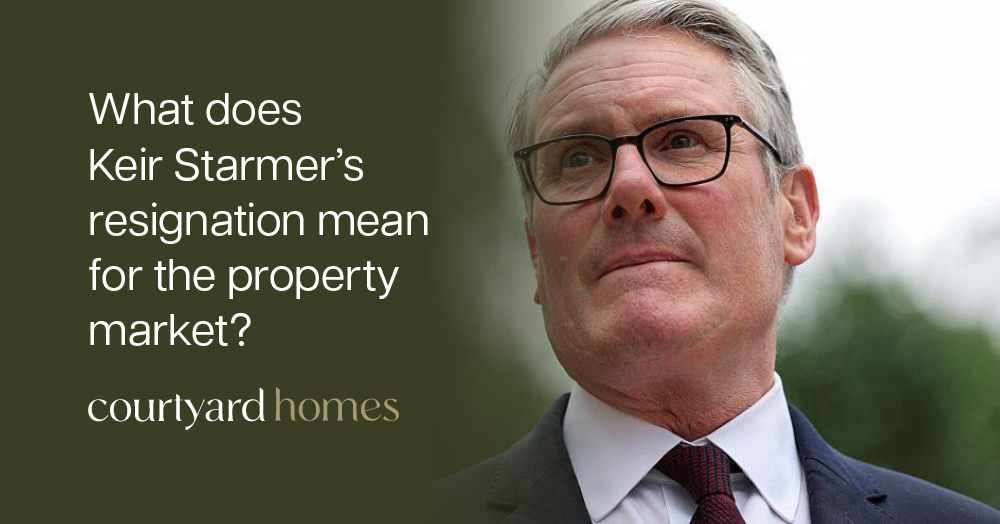
What does Keir Starmer's resignation mean for the property market?
It is a significant political moment. But what does it actually mean if you are buying, selling, or letting a home in WA3?
The honest answer is that the resignation itself does not automatically change house prices or mortgage rates. What matters far more is how financial markets respond to whoever takes over and what economic policies they bring with them.
Mortgage lenders price many fixed rate deals using swap rates, which are tied to expectations about future interest rates. If investors grow concerned that a new government will borrow and spend significantly more than planned, gilt yields and swap rates could rise. That would make it harder for lenders to keep reducing mortgage rates and could push some deals upwards.
So far, market reaction has been relatively measured. But buyers and sellers generally dislike uncertainty, particularly when it touches on taxation, borrowing, and mortgage costs. Some households may choose to pause until the leadership process is concluded and the new government's economic direction becomes clearer.
A Burnham government could also bring longer term changes to property taxation. He has previously backed reforming council tax and stamp duty, with talk of replacing them with an annual levy linked to property values. Scrapping stamp duty could be good news for movers and would improve market mobility. An annual property charge, on the other hand, could increase costs for some homeowners, landlords, and owners of more valuable homes.
For now, the market has not stopped. Serious buyers are still buying, and motivated sellers are still selling. We are seeing that here in Culcheth and across WA3.
The pace and confidence of the market in the months ahead will depend largely on one thing: whether the new government can convince financial markets that its economic plan adds up.
If you are weighing up your next move and want a straightforward conversation about what is happening locally, we are always happy to chat. Call us on 01925 767000 or visit courtyardhomes.co.uk.