What Happened to Culcheth Hall?
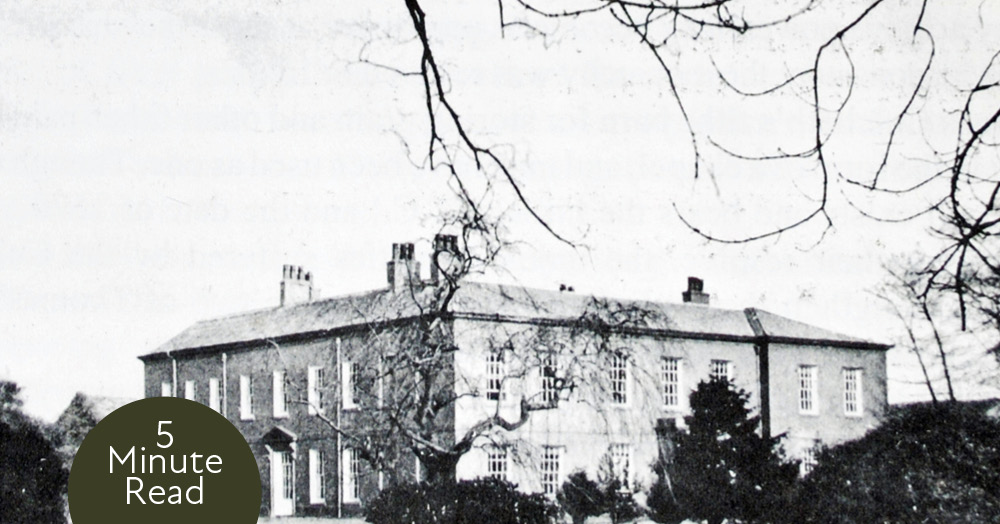
Culcheth Hall Drive, Culcheth Hall Farm, Culcheth Hall Farm Barns, Withington Avenue. Four addresses named after a house and a family that most people living on them have never heard of. The hall stood for the best part of 700 years, was pulled down within living memory, and the houses went up where it had been. Here's the story.
Where it was.
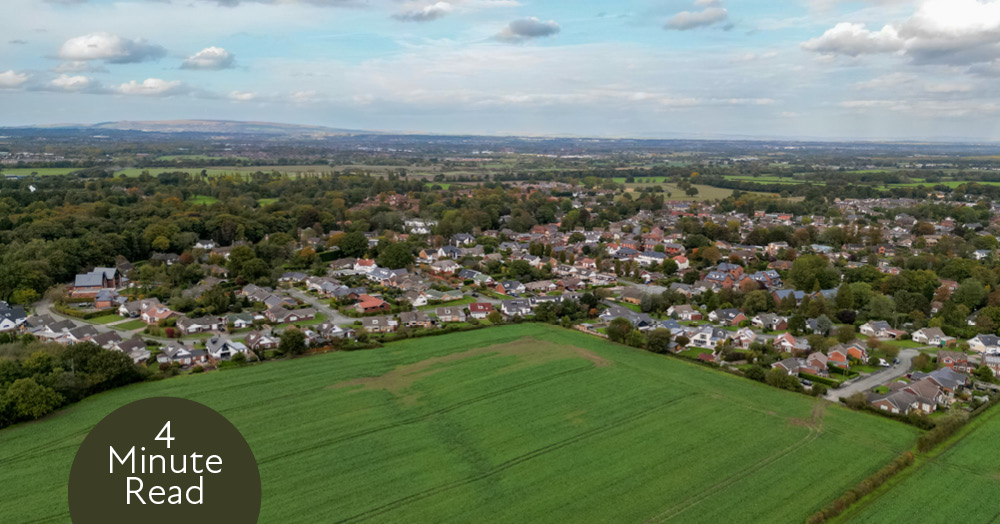
At the top of Culcheth Hall Drive, roughly where the largest modern houses now stand. The old county history puts it "to the east of Twiss Green". The drive you walk or drive up today was the hall's carriage drive, running from Warrington Road to the front door, and a 1928 Ordnance Survey map shows the hall's footprint at the top of it with the farm beyond.
The family that gave the village its name.
The de Culcheths were lords of the manor from around 1200, when Gilbert de Culcheth built the first hall. In 1246 a later Gilbert was killed, leaving four young daughters, and the Baron of Warrington sold their marriages to Hugh de Hindley, who married them to his four sons. The estate was split four ways, into Culcheth, Holcroft, Risley and Peasfurlong. Three of those are still names on the map. The fourth, the southern corner towards Birchwood, has all but vanished, surviving only as Pestfurlong Hill and Pestfurlong Moss in Birchwood Forest Park. The eldest daughter's husband took the Culcheth name and the hall, and the family held it for the next five centuries. They stayed Catholic through the Reformation. There was a Jesuit priest living at the hall from at least 1670, and a chapel inside the house. Local tradition has always said there was a tunnel into the house for the priest to escape through, and in 1953 the village Guides and Brownies, writing a booklet for the Coronation, described finding its brick-lined entrance off the drive.
The Civil War next door.
The Culcheths backed the King. Their neighbours at Holcroft Hall, a mile away, backed Parliament. We wrote about the Holcrofts and Colonel Blood earlier this year, and it's worth remembering the two families were on opposite sides of the same fields.
The end of the line.
Thomas Culcheth died in 1747 with no children, the last of the male line. The estate passed to his cousin Thomas Stanley of Great Eccleston, who had it for two years before he died in 1749, and then descended through Stanley's daughter Meliora, who married into the Dicconsons of Wrightington. When she died childless in 1794 it went to John Trafford of Trafford, whose family had also married into the Culcheths. A stained glass window on the back stairs showed the two coats of arms together: the Culcheth eagle carrying a child, and the Trafford griffin, with an old French motto meaning "My God, take care of me".
The Withingtons.
The Traffords put the estate up for auction and in 1824 Peter Withington bought it. He spent heavily on restoring the hall and built two eight-sided gate lodges, known locally as the threepenny-bit lodges, one at the bottom of the drive on Warrington Road and one at the farm entrance. A third, on the corner of Twiss Green Lane and Common Lane, was added in the 1840s. The estate passed to his grandson Thomas Ellames Withington, the squire who paid for much of the rebuilding of Newchurch after the fire of 1903, and whose name is on one of the farm barns with the date 1835. Withington Avenue is named after him.
How it ended.
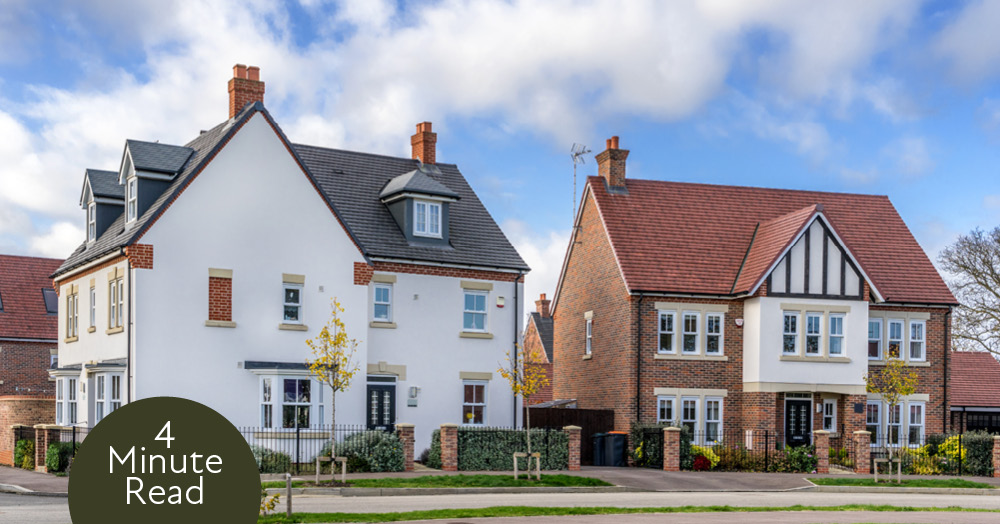
The last Withington, another Thomas Ellames, inherited in 1921. He was an army captain living on the south coast, married a Frenchwoman, settled in France, and sold the hall to the Co-operative Society, which used it as a holiday home for its staff. In the war it was requisitioned and British and American troops were billeted there. After the war it stood empty and went derelict. It was still standing in 1953, when the Guides described its four-foot-thick walls, flagstone passages and the peach walls in the walled garden, with fire holes in the brick for ripening the fruit. By about 1958 it was gone, and Adam Lythgoe (Estates) Ltd built Culcheth Hall Drive on the land. The farm lodge went in the 1950s. The lodge at the bottom of the drive lasted until 1969.
What's left. More than you'd think.
- The drive. Culcheth Hall Drive follows the line of the original carriage drive, which is why it's straighter and better treed than the roads around it.
- The bell. The bell from the hall's chapel went to Culcheth Methodist Church on Ellesmere Road, where it was in regular use for years. It was taken down from the foyer when the church was refurbished, but the church still has it.
- The farm. Culcheth Hall Farm and the Barns are the working end of the old estate. One barn carries "T E Withington 1835". The old tithe barn, where the village's corn tithes were collected, had a stone marked "TC 1676" and a bell tower built so it looked better from the hall's windows. Over the stables was another bell, for calling the farm workers in from the fields, with the words "Time and tide wait for no man".
- The third lodge. The house on the corner of Twiss Green Lane and Common Lane appears to be built around the original 1840s lodge.
- The names. Withington Avenue, Culcheth Hall Drive, the Farm and the Barns all carry the estate on.

Sources: A History of the County of Lancaster, Volume 4 (1911), "Townships: Culcheth", via British History Online; Culcheth Village, "Culcheth Hall" (culcheth.org.uk), including the 1953 Newchurch Guides and Brownies Coronation booklet and the 1928 Ordnance Survey map; South Trafford Archaeological Group, "The Gate Lodges of Culcheth Hall" (2022); My Warrington, "Culcheth". The demolition date of about 1958 is as given by Culcheth Village; no exact date has been found.