What Culcheth, Glazebury and Croft's Pubs Used to Be Called
Most of us have a local we've been going to for years. But plenty of pubs round here have had different names, different jobs and, in a few cases, very different lives. Here's what some of them used to be, and a few that have gone altogether.
Culcheth
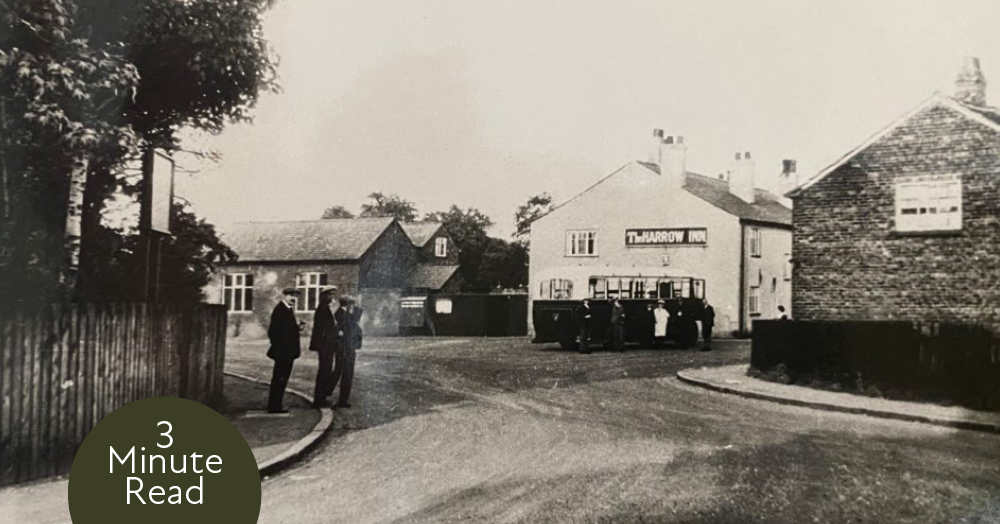
The Culcheth Arms was the Harrow.
The pub on Church Lane was the Harrow Inn for most of its life, going back to at least 1824, when the landlord was a David Allen. It was still called the Harrow in the mid-2000s and had become the Culcheth Arms by 2014.
The Pack Horse started out as two cottages.
It's usually described as the oldest pub in Culcheth. There was an innkeeper here, John Lowton, as far back as 1762, and the building began life as a pair of cottages known as Platts Cottages.
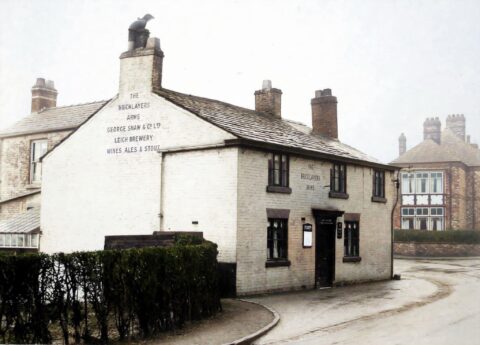
The Cherry Tree replaced the Bricklayers' Arms.
The Cherry Tree on Common Lane was built in 1964 on the site of the Bricklayers' Arms. That pub was run by the Merrick family for years, and it took its name from James Merrick's day job. He was a bricklayer.
The New Inn is now a restaurant.
It appears on the censuses of 1871, 1881 and 1891, run each time by the Lowe family, on what was then called Platt Lane. Platt Lane is the old name for that stretch of Warrington Road.
The Cross Keys is now someone's house.
The building is a private home these days, but if you look closely at the brickwork, the old pub lettering is still visible.
The ones that have gone.
Warrington Road once had several more. The Bull and Butcher stood opposite the New Inn, the Platt Inn was trading in 1881, and the Village Inn was run by Thomas and Sarah Ashton in the 1880s and 1890s.
Glazebury
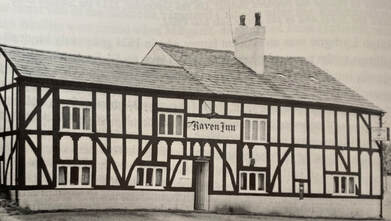
The Raven was the Raven and Sword.
It's a 16th-century black and white building, and in 1855 it was listed as the Raven and Sword. In 2019 it was put up for sale for demolition. A local action group fought to save it, set up a community benefit society to run it, and after nearly five years closed, it reopened in August 2023. It won a CAMRA award for pub saving the same year.
The Glazebury was the Chat Moss Tavern.
Joseph Blackburn was the landlord in 1841. By the 1881 census it had become the Chat Moss Hotel, and it's now the Glazebury, with links to the old railway station that once stood nearby.
The Foresters Arms is now a restaurant.
Its earliest record is in the 1846 tithe records, with George Massey as landlord.
The ones that have gone.
The Grapes Inn, run by James and then Sarah Marsh, closed in 1906. The Paviors' Arms on Warrington Road was run by Abraham Winstanley in the 1880s and 1890s.
Croft
The General Elliot has had three names, all about the same battle.
The pub on Lord Street dates back to the 1700s and has also been known as the Gibraltar Inn and the Admiral Rodney Inn. All three point to the Great Siege of Gibraltar between 1779 and 1783. General Eliott led the defence of the Rock, and Admiral Rodney's fleet brought relief to it in 1780. A Reginald Owen bought the property that became the pub in 1785.
Croft had its own brewery.
Croft Brewery on Heath Lane supplied local pubs and others further afield in the 1800s, and the Owen family ran it for nearly 150 years. It struggled once the big breweries started buying up pubs and tying them to their own beer, and it stopped brewing in the 1920s. The chimney came down in 1936, and the building is now a private house.
The Horseshoe and the Plough are still going.
The Horseshoe on Smithy Lane has been a pub for well over a hundred years. Like the General Elliot, its old bowling green is now the car park. The Plough on Heath Lane is a traditional country inn on the edge of the village.
The Joiners Arms stood where Abbey Close is now. It was on the corner where Abbey Close meets Lord Street today. In 1836 the landlord was Thomas Norbury, and it was home to the local Female Friendly Society, an early kind of savings and support club for women. It closed in 1939 and was demolished in 1960.
The Hermit Inn.
It stood at Hermitage Green, which counted as part of Croft until the boundaries changed in the 20th century. It has since been demolished.
If you know what any of the others used to be called, or have an old photo of one, we'd love to see it.
Sources: Croft History, "Public Houses" (crofthistory.org); CAMRA WhatPub listings for the Culcheth Arms, Cherry Tree, Pack Horse, Raven, Glazebury, General Elliot, Horseshoe and Plough; My Warrington, "Culcheth" (mywarrington.org).